

Includes index.
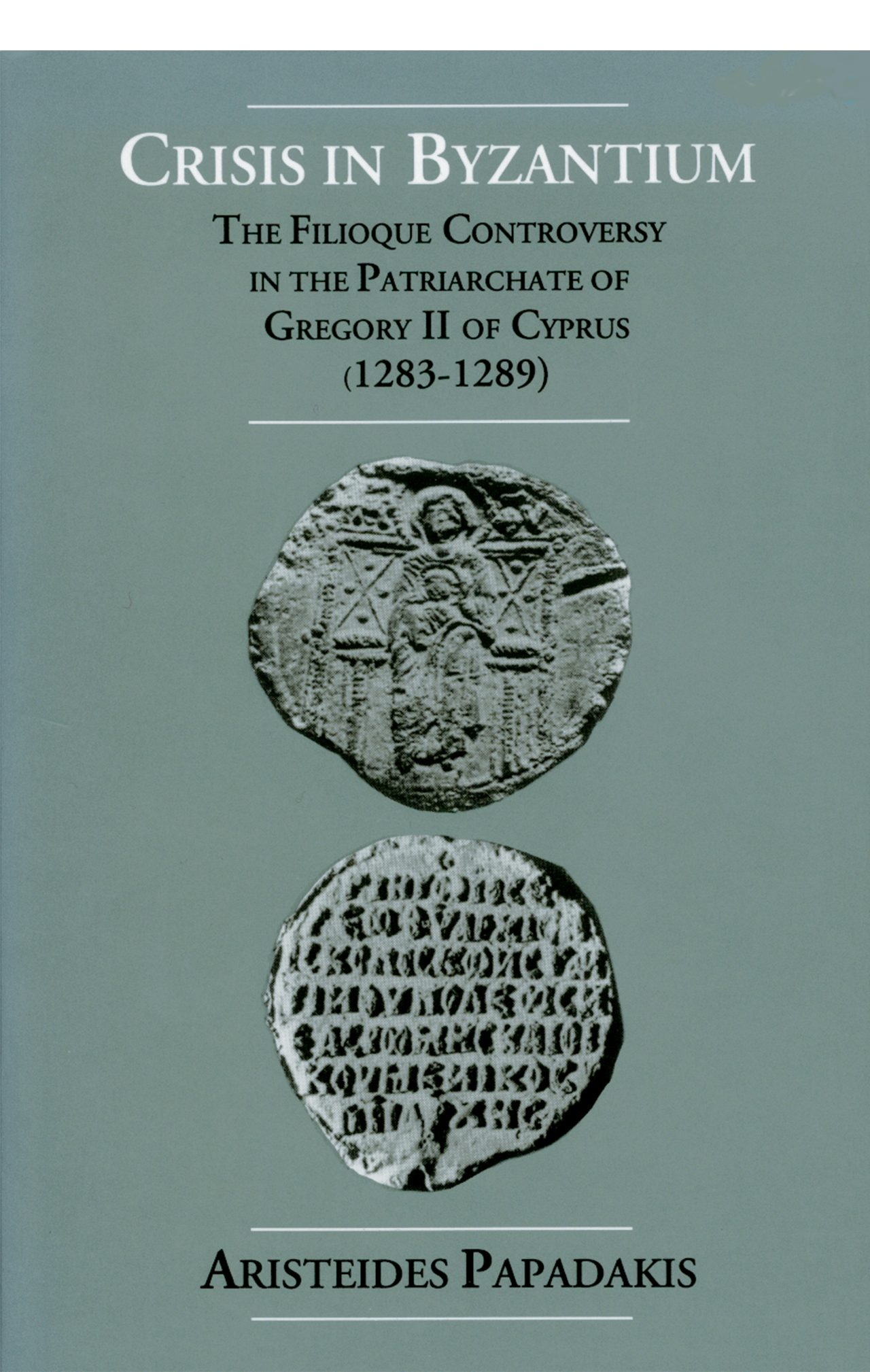
Of the early attempts to heal the schism between the Byzantine and Western churches none is as famous as the Council of Lyons (1274). Less familiar is the Byzantine reaction that followed in the patriarchate of Gregory of Cyprus, when the settlement of 1274 was formally repudiated by imperial decree and the solemn decision of the Byzantine Church at the Council of Blachernae, (1285). This is the first full study available in English of Gregory II and the Council of 1285. The moving force behind the dogmatic decision of 1285 was the patriarch. He offered a genuine solution to the problem, which is of interest not only to students of church history but to those involved in the ecumenical movement.
About the Author: Dr Aristeides Papadakis is Professor of Byzantine History at the University of Maryland (UMBC).
1 review
-
Filioque & Gregory II of Cyprus
Referenced countless times in discussions on the Filioque, I picked up Crisis in Byzantium with real enthusiasm, hoping to deepen my understanding of an issue that is often mentioned but rarely treated with the metaphysical seriousness it demands. Too often, the Filioque is brushed aside as a minor linguistic or theological nuance; Papadakis makes clear that it is anything but. At stake is a fundamental rupture with the Cappadocian vision of the Trinity.
The book is, at times, genuinely exhilarating. Papadakis presents a narrative filled with high drama, high stakes, and a tension that stretches across the Mediterranean world. The theological debates are not abstract exercises—they are existential, ecclesial, and civilizational. This is not a marginal disagreement to be glossed over; it is a central fault line shaping the divergence between East and West.
What emerges clearly is that this debate affects far more than a single doctrinal clause. It touches the entire ordo theologiae: how one understands divine causality, the nature of the Trinity, and even the interpretation of theophanies. Do we read Scripture as revealing the pre-incarnate Logos directly, or do we reduce such manifestations to symbolic or created intermediaries? The implications are sweeping, extending across multiple theological traditions.
To put it plainly: the Filioque disrupts the monarchy of the Father, despite Western attempts to frame it otherwise. The Creed begins, “I believe in one God, the Father Almighty,” not in an abstract essence to which three persons are later attached. The Eastern insistence on the Father as sole cause (aitia) preserves both the unity and personal reality of God, whereas the Western formulation risks collapsing this into a more impersonal framework.
One of the most illuminating passages (p.125) captures this distinction with striking clarity:
“For on the one hand, [the Spirit] proceeds and has its existence from the Father… while, on the other, it goes forth and shines through the Son… as light proceeds from the sun through its rays… yet the light derives neither being nor existence from the rays… but immediately and exclusively from the sun.”
This analogy perfectly encapsulates the doctrine of the Spirit’s eternal manifestation through the Son while safeguarding the Father as the sole source of hypostatic origin. It clarifies how the Fathers could speak both of the Spirit’s procession from the Father and His manifestation through the Son without contradiction.
My only lingering question is this: why has Gregory II of Cyprus not been canonized? His articulation of these distinctions anticipates, and arguably grounds, the later synthesis of Gregory Palamas. Given the enduring importance of his contribution to the defense of Orthodox Trinitarian theology, his relative obscurity is surprising.

